


Tips To Clean Greasy Kitchen Cabinets Without Causing Damage
Greasy kitchen cabinets are one of those problems you don’t notice until it’s too late. Day after day, steam, oil splatters and cooking fumes settle quietly onto surfaces, forming a sticky layer that dulls the shine of your cabinets. Handles feel tacky, fingerprints refuse to disappear and no matter how often you wipe them, the grime seems to stay put. When left unchecked, this buildup can even damage the finish and shorten the life of your cabinetry.
However, you don’t need harsh chemicals or aggressive scrubbing to fix it. With the right approach and a little patience, you can safely remove grease while protecting the material underneath. This article will provide you with tips to clean greasy kitchen cabinets without causing damage. Whether you are freshening up your kitchen or preparing for a quality bond cleaning Townsville inspection, these practical tips will help you clean effectively without causing damage.
Hide
Show
- Start With a Gentle Pre Clean to Loosen Grease
- Choose the Right Tools to Avoid Scratches
- Use Natural Degreasers Instead of Harsh Chemicals
- Pay Attention to Cabinet Material and Finish
- Dry and Polish for a Lasting Finish
- Maintain Regular Cleaning to Prevent Build Up
- Deep Clean Before Moving Out or Inspections
- Infographic: How To Clean Greasy Kitchen Cabinets
- Wrapping Up
1. Start With a Gentle Pre Clean to Loosen Grease
Before tackling heavy grease, it is very important to remove loose dust and surface dirt. Skipping this step, can cause tiny particles to scratch the finish while wiping. Use a dry microfiber cloth or soft duster to gently clean the cabinet doors, edges and handles. This simple action, prepares the surface and prevents unnecessary wear.
Once the dust is gone, use warm water mixed with a few drops of mild dishwashing liquid. Lightly dampen a cloth, never soak it and wipe the cabinets to loosen the top layer of grease. This first step, makes deeper cleaning much easier and reduces the need for excessive scrubbing later.
2. Choose the Right Tools to Avoid Scratches
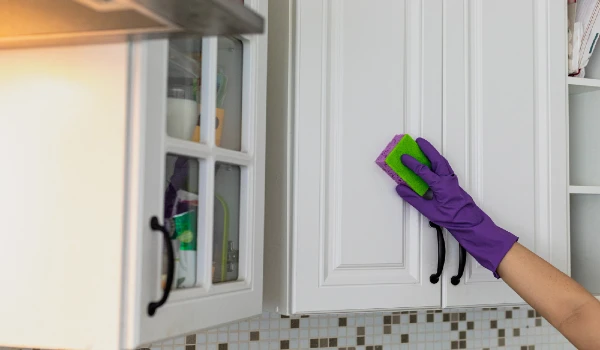
The tools you use play a major role in protecting your cabinets. While steel wool or hard scrubbers may seem effective, they can permanently scratch paint, laminate or wood finishes. Even minor scratches create rough spots where grease collects faster, making future cleaning more difficult.
Instead, stick to soft microfiber cloths, gentle sponges or non abrasive scrub pads. An old toothbrush works well for tight corners and around handles. Using the right tools ensures you remove grime safely while keeping the cabinet surface smooth and intact.
3. Use Natural Degreasers Instead of Harsh Chemicals
Strong chemical cleaners might give quick results but they often do more harm than good. Bleach, ammonia or solvent based sprays can strip finishes, fade colours or weaken adhesives. Over time this can make cabinets look older and worn out.
Natural solutions are both safer and surprisingly effective. A mixture of white vinegar and warm water cuts through grease easily, while baking soda paste helps tackle stubborn spots. These gentle alternatives clean thoroughly, without exposing your cabinets or your family to harsh chemicals.
4. Pay Attention to Cabinet Material and Finish
Different cabinet materials require different cleaning methods. Wooden cabinets are especially sensitive to moisture, so using too much water can cause swelling, warping or cracks. Always use a slightly damp cloth and dry the surface immediately to protect the wood.
Laminate or painted cabinets are generally more resistant but can still be damaged by abrasive cleaners. Avoid rough scrubbing or strong solvents that can peel paint or dull the shine. Understanding your cabinet type helps you choose the safest approach and prevents costly repairs down the line.
5. Dry and Polish for a Lasting Finish
After cleaning, drying is just as important as washing. Leaving moisture behind can lead to streaks, water spots or long term damage especially on wooden or painted surfaces. Use a clean, dry cloth to wipe every section thoroughly once you’re done.
For added protection, apply a suitable polish or conditioner depending on the cabinet material. This creates a light protective barrier that repels grease and makes future cleaning easier. A quick polish also restores shine and keeps your kitchen looking fresh and well maintained, especially during a bond cleaning Townsville inspection.
6. Maintain Regular Cleaning to Prevent Build Up
Prevention is always easier than deep cleaning. Grease becomes harder to remove the longer it sits; so developing a weekly cleaning routine can save you time and effort. A quick wipe, with mild soapy water keeps surfaces clean and stops build up from forming.
Improving ventilation, in your kitchen also helps. Using an exhaust fan or range hood reduces airborne grease, that settles on cabinets. Small habits like these make a noticeable difference and keep your cabinets looking newer for years.
7. Deep Clean Before Moving Out or Inspections
When preparing for a move, greasy cabinets can easily affect your final inspection. Property managers often check kitchens carefully and sticky or stained cabinets can result in deductions from your deposit. A detailed, damage free clean ensures your kitchen meets expectations.
Many tenants opt for professional bond cleaning Townsville services to guarantee spotless results, especially for tough areas like cabinets and splashbacks. However, if you’re cleaning yourself, take extra care with interiors, edges and handles. Following these techniques can help you achieve professional standards and secure your bond refund.
Infographic: How To Clean Greasy Kitchen Cabinets

Wrapping Up
Cleaning greasy kitchen cabinets doesn’t have to be stressful or risky. A step by step approach from precleaning to polishing ensures your cabinets stay both clean and protected. Whether it’s part of your regular kitchen routine or preparation for a move out clean, consistent care makes all the difference. Treat your cabinets well, and they’ll keep your kitchen looking spotless, fresh and welcoming every single day.