

Can Steam Mops Effectively Disinfect Household Surfaces?
Keeping your home clean goes beyond just making it look tidy; it’s about creating a safe, hygienic space for you and your family. With growing awareness around germs and bactaeria; many homeowners are turning to modern cleaning tools like steam mops. But the big question remains: can they truly disinfect surfaces or are they just another cleaning trend?
Steam mops have gained popularity for their ability to clean without harsh chemicals, making them an attractive option for eco conscious households. This article will let you know if steam mops can effectively disinfect household surfaces. If you’re considering using one, especially for deep cleaning or even preparing for quality bond cleaning Townsville, it’s important to understand how effective they really are when it comes to eliminating germs and bacteria.
Hide
Show
- How Do Steam Mops Work for Household Cleaning?
- Can Steam Mops Truly Disinfect Surfaces?
- Best Surfaces for Steam Mop Disinfection
- Benefits of Using Steam Mops for Deep Cleaning
- Limitations of Steam Mops You Should Know
- Tips to Maximise Steam Mop Effectiveness
- Infographic: Can a steam mop kill germs?
- Wrapping Up
1. How Do Steam Mops Work for Household Cleaning?
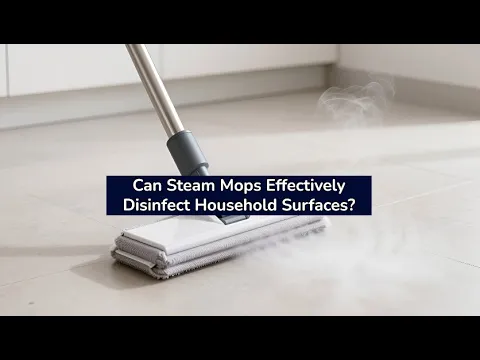
Steam mops use high temperature steam to loosen dirt, grime, and grease from surfaces. Water is heated inside the mop to produce steam, which is then released through a cleaning pad onto floors or other surfaces. The heat helps break down stubborn residues, making it easier to wipe them away.
What makes steam mops unique is that they rely on temperature rather than chemicals. The heat generated, often above 100°C, can kill certain types of bacteria and germs. This makes them a preferred choice for people looking to reduce chemical exposure while still maintaining a hygienic home.
2. Can Steam Mops Truly Disinfect Surfaces?
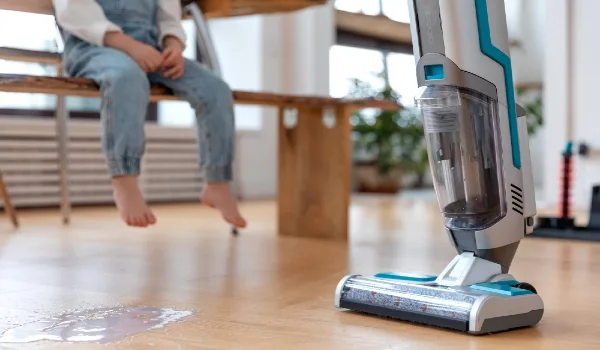
The short answer is yes, steam mops can disinfect surfaces but only under the right conditions. The effectiveness depends on factors like temperature, duration of steam exposure and the type of surface being cleaned. When used properly, the high heat can kill many common household bacteria and germs.
However, it’s important to note that “cleaning” and “disinfecting” are not always the same. While steam mops can reduce a significant number of microbes; they may not eliminate all pathogens, especially if the steam doesn’t stay on a surface long enough. For guaranteed disinfection, proper technique is crucial.
3. Best Surfaces for Steam Mop Disinfection
Steam mops work best on sealed, hard surfaces that can withstand high temperatures. These include tiles, sealed hardwood floors, laminate and some types of stone flooring. The steam penetrates small crevices, making it effective for removing hidden dirt and bacteria.
On the other hand, unsealed wood, delicate surfaces, or certain types of flooring may get damaged by excessive moisture and heat. Before using a steam mop, always check the manufacturer’s guidelines to ensure the surface is suitable for steam cleaning.
4. Benefits of Using Steam Mops for Deep Cleaning
One of the biggest advantages of steam mops is their chemical free cleaning approach. This makes them ideal for homes with children, pets, or individuals sensitive to strong cleaning agents. You can achieve a high level of cleanliness without introducing harmful substances into your living space.
Additionally, steam mops can be a time saving tool. They combine cleaning and partial disinfection in one step, reducing the need for multiple products. For tasks like bond cleaning Townsville, where thorough cleaning is essential, steam mops can help achieve a deeper level of cleanliness efficiently.
5. Limitations of Steam Mops You Should Know
Despite their benefits, steam mops are not a one size fits all solution. They may struggle with heavily soiled areas where dirt buildup is thick. In such cases, precleaning may be required before using steam to disinfect effectively.
Another limitation is that steam mops may not be suitable for all types of bacteria or viruses. While they can kill many common germs, they might not meet the strict standards required for hospital grade disinfection. For critical hygiene needs; additional disinfectants may still be necessary.
6. Tips to Maximise Steam Mop Effectiveness
- Start with dry cleaning: Always vacuum or sweep the area first, to remove loose dirt and debris before using the steam mop.
- Move slowly: Glide the steam mop slowly over surfaces to allow enough time for the heat to kill germs effectively.
- Avoid quick passes: Rushing through the process reduces the disinfecting power of the steam.
- Use clean mop pads: Regularly wash or replace mop pads to prevent spreading dirt and bacteria.
- Follow surface guidelines: Ensure the surface is suitable for steam cleaning to avoid damage.
- Focus on high touch areas: Spend extra time on spots like kitchen floors and entryways where germs are more likely to accumulate.
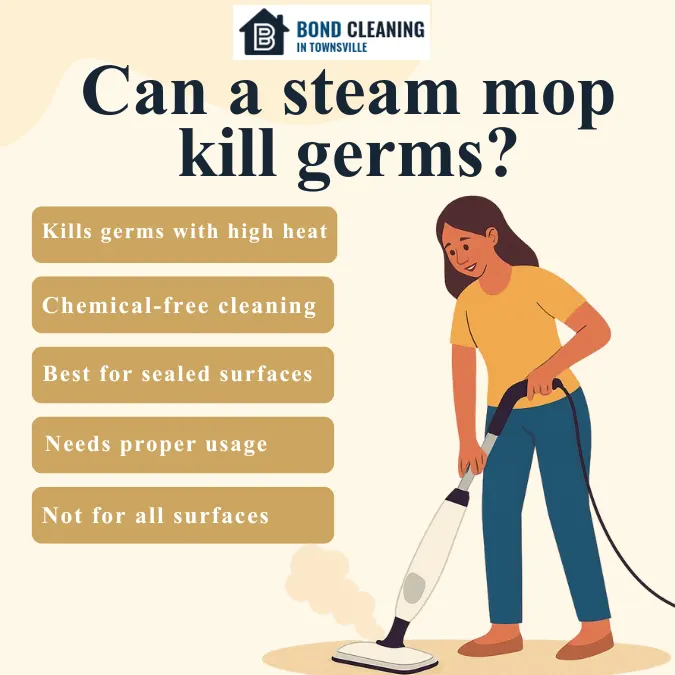
Infographic: Can a steam mop kill germs?
Wrapping Up
Steam mops are a powerful and convenient tool for maintaining a clean and hygienic home. They offer the added advantage of reducing chemical use while still tackling dirt and many types of bacteria. When used correctly, they can contribute significantly to disinfecting household surfaces. Whether you’re maintaining daily cleanliness or preparing for a detailed clean like bond cleaning, steam mops can be a valuable addition to your cleaning routine.